How It Works
From one description of the job to quotes you can compare
Tell us about the job
Your suburb, the height you need to reach, roughly how much of the building, and how long. About a minute.
Scaffolding contractors quote
Scaffolding companies and erectors covering your area receive the request and come back to you directly.
You compare and choose
Compare itemised quotes side by side, appoint whoever you prefer, or nobody. No obligation either way.
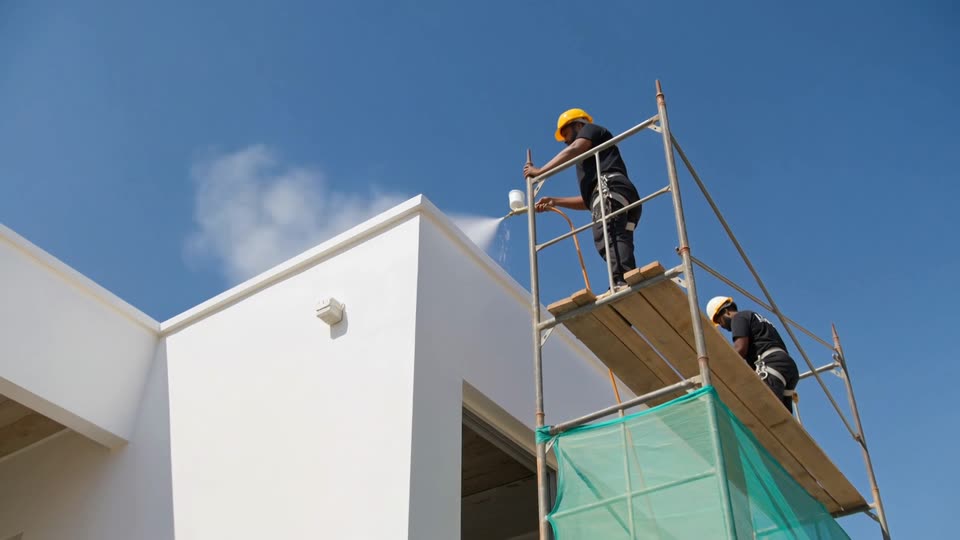
Scaffolding Cape Town arranges free quotes for scaffolding hire, erection and dismantling across the metro and the wider Western Cape. Houses, commercial buildings, construction sites and industrial plant, from a single mobile tower to a full multi-storey elevation.
We do not supply or erect scaffolding. Independent scaffolding contractors and hire companies do that. Describe the job once and the companies covering your area quote you directly.
Send the address, the height you need to reach and roughly how long the scaffold has to stay up. That is enough for contractors to price it.
Get Scaffolding QuotesWhat Scaffolding Costs in Cape Town
Published South African hire rates, given per square metre of elevation covered per month. These are equipment ranges, not quotations:
| Item | Indicative range or share | Notes |
|---|---|---|
| Modular system scaffold (Kwikstage and similar) | R90 – R250 per m² per month | The standard on most South African sites |
| Tube and coupler scaffold | R120 – R350 per m² per month | Irregular geometry, industrial and plant work |
| Suspended platforms and cradles | R300 – R700+ per m² per month | High-rise facades where ground-based access is impractical |
| Erection, dismantling and labour | Roughly 73% of total scaffold spend | The largest line item on almost every scaffold invoice |
| Transport and logistics | Roughly 7% of total scaffold spend | Delivery and collection, both charged |
| Deposit | Commonly around R3,000 | Refundable against equipment condition |
These are indicative Cape Town market ranges, not a quotation. The per-square-metre figures are published South African equipment hire rates and exclude erection, dismantling, transport and any design work. Industry cost breakdowns put labour, assembly and dismantling at roughly 73% of total scaffold spend, with transport and logistics adding about another 7%, so an equipment rate on its own tells you very little about the final number.
Compare written quotes on what each one actually includes: erection, dismantling, transport both ways, the hire period covered, weekly inspections, and the rate if you over-run.
How Scaffolding Is Measured
Scaffold is priced on the face area of the elevation it covers, in square metres, not on the floor area of the building. A 10 m wide elevation reaching 6 m is 60 m², whether the building behind it is a cottage or a warehouse.
Height then acts separately on the price. Every lift adds standards, ledgers, braces, boards and guard rails, and above roughly 6 m the tie-in and bracing requirements step up. Two quotes covering the same area can differ substantially if one has read the height correctly and the other has not.
Scaffolding Systems
The scaffolding systems in general use here differ mainly in how quickly they go up and what shapes they can follow. Which one suits a job is usually decided by the building, not by preference.
- Modular system scaffold. Kwikstage and similar systems, with wedge or cup connections. Fast to erect, dimensionally consistent, and what most South African building work uses.
- Tube and coupler. Loose tube joined with couplers. Slower and more labour-intensive, but it will follow any shape, which is why plant and industrial work depends on it.
- Mobile towers. Rolling frames on castors with outriggers, for work that moves along a wall or a run of services.
- Aluminium towers. Light enough for two people to move and erect, and treated as special scaffolding under SANS 10085-1, which means the manufacturer manual governs.
- Suspended platforms. Cradles hung from roof-level outriggers on high-rise buildings.
- Birdcage scaffold. A full deck over an area, for ceilings, atriums and soffits, so everyone works at one level at once.
Scaffolding in Cape Town Conditions
Wind
The south-easter is the defining local factor. Sustained wind stops work at height, and it loads the scaffold itself, which is why tie-in patterns and any sheeting or netting have to be right rather than approximately right. Sheeting a scaffold turns it into a sail, and it changes the tie requirements. After a serious blow the structure should be inspected again before anyone climbs it.
Season
Cape Town takes its rain between roughly May and August, and roof, waterproofing and exterior painting work compresses into the months either side. Scaffold demand peaks with it, and contractors are hardest to book exactly when everyone has discovered the same leak. Booking in autumn rather than in the first week of rain is the practical answer.
Ground
Much of the Cape Flats and the West Coast strip is sand. Scaffold standards concentrate load into small points, and sand spreads it poorly, so sole plates and adjustable base jacks are routine here rather than optional. Steep erven in Hout Bay, Camps Bay and the mountain suburbs bring the opposite problem: a level base on a slope built out of base jacks and stepped foundations.
Salt air
On the Atlantic Seaboard and the West Coast, corrosion is real and it works on scaffold components as much as on anything else. Long-duration scaffolds near the sea are worth inspecting for component condition, not just for configuration.
Older buildings
Tying into masonry in the City Bowl, Bo-Kaap, Woodstock, Observatory and the older Southern Suburbs is not the same as tying into a modern frame. Soft brick, lime mortar, heritage facades and plasterwork that must not be damaged all change how a scaffold gets secured, and that is a design question rather than an on-site improvisation.
Safety and the Rules That Apply
Two documents govern scaffolding in South Africa. Construction Regulation 16, under the Occupational Health and Safety Act 85 of 1993, requires a competent person appointed in writing to supervise scaffold work, with trained erectors, team leaders and inspectors. SANS 10085-1, updated in 2024, is the standard for access scaffolding: erection, inspection before each shift and after any event that could affect the structure, and a dismantling plan developed by the competent person.
- A scaffold tag at the access point, showing its status and the date of the last inspection.
- An inspection register kept on site, not in an office.
- A handover certificate before the scaffold is used.
- Designed structures signed off by an engineer where the standard requires it, including suspended, hanging and heavily loaded scaffolds.
- No modification by anyone except the scaffolding contractor.
The most common cause of scaffold incidents is not collapse. It is a guard rail, a board or a tie removed by someone who needed to get a job done and intended to put it back.
Choosing a Scaffolding Contractor in Cape Town
This site does not vet or rank the contractors who quote you, so the checking is yours to do. The questions that separate a real quote from a cheap one:
- Who is the competent person appointed in writing for the scaffold, and are the erectors, team leaders and inspectors trained for their roles? Construction Regulation 16 requires that appointment.
- Will the scaffold be erected and inspected to SANS 10085-1, and will you get a handover certificate and an inspection register kept on site?
- Is the quote for equipment only, or does it include erection, dismantling and transport both ways?
- What hire period does the price cover, and what is the extension rate?
- Who inspects the scaffold during the hire, and how often?
- Does the contractor carry public liability cover, and for how much?
- Is a scaffold design or engineer sign-off needed for this structure, and who pays for it?
Areas We Cover
Quotes are arranged across the Cape Town CBD and City Bowl, the Atlantic Seaboard, the Southern Suburbs, the South Peninsula, the Northern Suburbs, the West Coast strip, the Cape Flats, the Helderberg and the industrial belts at Paarden Eiland, Epping, Montague Gardens, Killarney Gardens, Airport Industria, Bellville South, Blackheath and Atlantis, and out into the Winelands.
Frequently Asked Questions
What does scaffolding cost in Cape Town?
Published South African equipment hire rates run roughly R90 to R250 per square metre per month for modular system scaffold and R120 to R350 for tube and coupler, with suspended platforms higher again. Those figures are equipment only. Industry cost breakdowns put labour, assembly and dismantling at around 73% of total scaffold spend and transport at about 7%, so always ask for the delivered figure rather than a rate.
Do you erect the scaffolding yourselves?
No. Scaffolding Cape Town is a free quote service. Independent scaffolding contractors and hire companies supply, erect, inspect and dismantle the scaffold, and your contract is with the company you appoint.
How is scaffolding measured and priced?
On the face area of the elevation covered, in square metres, not on the floor area of the building. Height matters separately, because each additional lift adds standards, ledgers, braces, boards and guard rails, and tie-in requirements step up with height.
How long does it take to erect scaffolding?
A single-storey domestic elevation is often a few hours. A full house wrap is usually a day. Multi-storey commercial and industrial structures run from days to weeks depending on height, configuration and access. Erection and dismantling are separate visits and both should be priced.
Who is responsible for scaffolding safety?
Construction Regulation 16 under the Occupational Health and Safety Act requires a competent person appointed in writing to supervise scaffold work, with trained erectors, team leaders and inspectors. SANS 10085-1 covers erection and inspection, including inspection before each shift and after any event that could affect the structure.
Do I need permission to put scaffolding on the pavement?
If the scaffold encroaches on a pavement or road reserve, the City of Cape Town controls that space and permission is required. Ask at quote stage who applies, what it costs and how long it takes, because it can hold up a start date.
How long can I keep the scaffolding up?
As long as you pay for. Most contractors quote a first hire period then a weekly or monthly extension rate. Over-runs are the most common reason a scaffold budget slips, so agree the extension rate in writing before the scaffold arrives.
Does wind stop scaffolding work in Cape Town?
Yes. A sustained south-easter stops work at height and, once it passes, the structure should be inspected again before anyone uses it. Build weather contingency into the programme rather than assuming it away, particularly for summer work on exposed sites.
Is the scaffolding inspected during the hire?
It should be. Inspection before work begins, at intervals during the hire, and after any event that could affect the structure, recorded in a register kept on site. Ask who does it, how often, and whether it is included in the quoted price.
Can I move or alter the scaffold myself?
No. Removing a guard rail, a board or a tie to get a job done is the single most common cause of scaffold incidents, and it voids the handover. Only the scaffolding contractor should modify a scaffold.
Scaffolding Cape Town is a free quote-matching service. We do not supply, erect, inspect or dismantle scaffolding. Every quote comes from an independent scaffolding contractor or hire company, and your contract is with the company you appoint.
One description of the job, quotes from scaffolding contractors covering your area. Free to use, no obligation.
Get Scaffolding QuotesScaffolding Services in Cape Town
Every scaffolding service we arrange quotes for, each with its own page
Scaffolding Hire
Hire rates, periods, what is included and what is not
Scaffolding Rental
Rental terms, extensions and what happens when a job over-runs
Scaffolding Erection
How a scaffold goes up, gets tagged, inspected and comes down
Scaffolding Hire Prices
What scaffolding costs in Cape Town and what moves the number
Scaffolding Companies
What separates a scaffolding company from a man with frames
Scaffolding Contractors
Competent persons, appointments and what to check before signing
Access Scaffolding
General working platforms to SANS 10085-1, the everyday scaffold
Kwikstage Scaffolding
The modular system most South African sites are built on
Mobile Scaffolding
Rolling towers, outriggers and the rules for moving them
Scaffold Tower Hire
Tower sizes, platform heights and day, weekend and week rates
Aluminium Scaffolding
Light, fast towers, and why they count as special scaffolding
Suspended Scaffolding
Cradles hung from the roof for high-rise facades
Birdcage Scaffolding
Full-area decks for ceilings, atriums and soffits
Hanging Scaffolding
Access hung off a structure where the ground is unavailable
Scaffold Staircase
Stair towers for crews, materials and heavy daily traffic
Scaffolding Design
When a scaffold needs an engineer, and what the drawings cover
Residential Scaffolding
Houses, double storeys, gables and awkward suburban access
Commercial Scaffolding
Offices, retail and buildings that keep operating around the work
Body Corporate Scaffolding
Apartment blocks, complexes and sectional title schemes
Industrial Scaffolding
Plant, factories and facilities with permits and shift patterns
Construction Scaffolding
New builds, programme scaffolding and lifts that follow the trades
Painting Scaffolding
Access for exterior painting, sheeting and containment
Formwork
Slab and column formwork, props, and how it differs from scaffold
Rubble Chute Hire
Getting demolition waste down safely, section by section
Roofing Scaffolding
Edge protection, roof access and the Cape Town winter rush
Waterproofing Scaffolding
Access for membranes, coatings and leak repairs before the rain
Solar Scaffolding
Safe roof access for PV installation and panel handling
Facade Scaffolding
Full-elevation access for cladding, repair and restoration
Building Maintenance Scaffolding
Recurring access for body corporates and property managers
Renovation Scaffolding
Alterations, extensions and heritage work on occupied buildings
Industrial Plant Scaffolding
Access around vessels, exchangers and congested pipework
Shutdown Scaffolding
Turnaround access resourced to a window that does not move
Refinery Scaffolding
Tank farms, process units and permit-controlled environments
Factory Scaffolding
Production facilities, machinery access and out-of-hours work
Warehouse Scaffolding
High-level lighting, sprinklers, racking and roof structures
Get Scaffolding Quotes
Describe the building, the work and roughly how long you need the scaffold, and get quotes back from scaffolding contractors in your area.
Free to use, no obligation. Your request goes to LEADERR APPROVED scaffolding contractors covering your area, who quote you directly.
Client Reviews
Powered by leaderr